
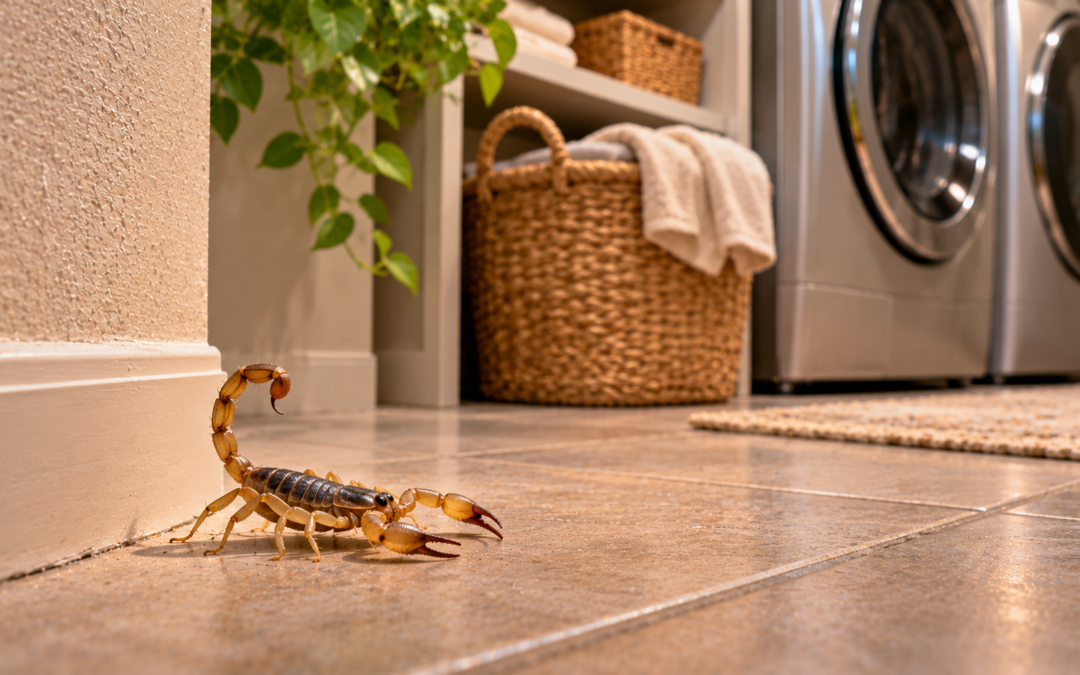
Seeing a scorpion on the laundry room floor during a cool St. George evening can be surprising. These desert predators are associated with warm nights, so homeowners sometimes assume that temperatures dropping means the risk has passed. Yet a scorpion that has found protected shelter near a house may remain hidden through cooler periods and occasionally turn up indoors.
That does not mean winter activity matches the busy summer season. Scorpions generally become less active as temperatures fall, and sightings can be sporadic. Our technicians look at the location, possible access routes, and shelter around the home to understand why an encounter happened rather than blaming the weather alone.
Cooler Temperatures Change Where Scorpions Shelter
Scorpions are ectothermic animals, so their movement depends heavily on environmental conditions. As nights cool in Southern Utah, they generally reduce activity and seek protected cracks or other relatively stable places. The sheltered areas around a St. George property can remain more comfortable than an exposed stretch of desert ground.
Places worth checking include:
- Block walls: Narrow gaps between materials can provide shelter away from wind and direct exposure.
- Garage corners: Boxes, shelving, and stored equipment create quiet places where scorpions can remain undisturbed.
- Foundation joints: Cracks beside slabs and exterior walls may offer both cover and routes toward living spaces.
- Patio edges: Rock landscaping and shaded structures can protect resting scorpions during seasonal changes.
- Utility openings: Unsealed penetrations may connect outdoor shelters with warmer indoor spaces.
Finding a scorpion near a doorway does not prove an indoor colony exists. It may have entered by chance from a sheltered spot outside. However, sightings in several rooms or repeated encounters near the same wall deserve a closer look.
Our article about hidden scorpion activity describes how these animals use crevices, wall edges, and storage spaces. Knowing where they hide helps us investigate more than the exact spot where someone found one.
Entry Gaps and Available Prey Can Sustain Sightings
A scorpion needs an opening to get inside, and many homes have small gaps that residents rarely notice. Worn weatherstripping, garage seals, and poorly finished utility penetrations can become routes from a patio or yard into the building. Some scorpions may also follow insect prey into protected places.
Our inspection considers several connected conditions:
- Door sweeps: Daylight beneath an exterior door can indicate a gap that deserves evaluation.
- Garage thresholds: Uneven pavement or damaged seals can leave sheltered access along the floor.
- Exterior lighting: Lamps may attract insects that provide food for hunting scorpions.
- Irrigated landscaping: Damp, shaded pockets can support prey insects close to the foundation.
- Stored materials: Firewood, outdoor supplies, and clutter may create hiding areas beside entry points.
Not every crack has been used by a scorpion, and outdoor insect activity alone does not confirm a scorpion problem. Our technicians compare the physical conditions with reported sightings and inspect accessible areas where movement is plausible.
A useful companion resource is our guide to common pest entry points. It explains why doors, vents, and utility connections need attention even when a pest is only spotted far from the opening. Addressing the correct route is more meaningful than sealing random gaps without investigating.
Professional Inspection Helps Build a Seasonal Response
Because sightings may be intermittent during cooler months, homeowners need a plan based on evidence rather than an assumption that scorpions have disappeared. Our scorpion control service examines foundations, garages, block walls, patios, landscaping, and sheltered gaps before selecting appropriate measures.
A focused plan may involve:
- Activity review: We ask when and where scorpions have appeared to identify recurring patterns.
- Harborage inspection: Accessible exterior cracks, storage corners, and structural transitions are checked.
- Targeted treatment: Applications focus on relevant hiding places and routes, following product-label requirements.
- Exclusion guidance: We explain where door seals, gaps, or other openings may need correction.
- Follow-up monitoring: New sightings help show whether activity is changing as temperatures and conditions shift.
Pest treatment cannot repair every building defect, and reducing the number of insects outside cannot guarantee another scorpion will never approach a home. Maintenance and careful monitoring work alongside appropriately targeted service.
If a scorpion is found indoors, avoid handling it directly. Keep children and pets away, and seek medical advice promptly after a sting, particularly if concerning symptoms occur. Identification should be left to someone who can assess the specimen safely.
St. George’s cooler season may reduce overall scorpion movement, but walls, garages, and indoor spaces can still provide shelter. A documented inspection helps distinguish an isolated encounter from activity that warrants treatment, without overstating the seasonal risk. Homeowners can also note the location and date of each encounter, allowing technicians to compare patterns at later visits and prioritize the most useful areas to inspect.
Find the Routes Behind the Sighting
If scorpions are appearing in your garage or living spaces, contact Preventive Pest Control for a professional assessment. We can review likely shelter and entry points, recommend suitable treatment, and explain what to watch for afterward.