
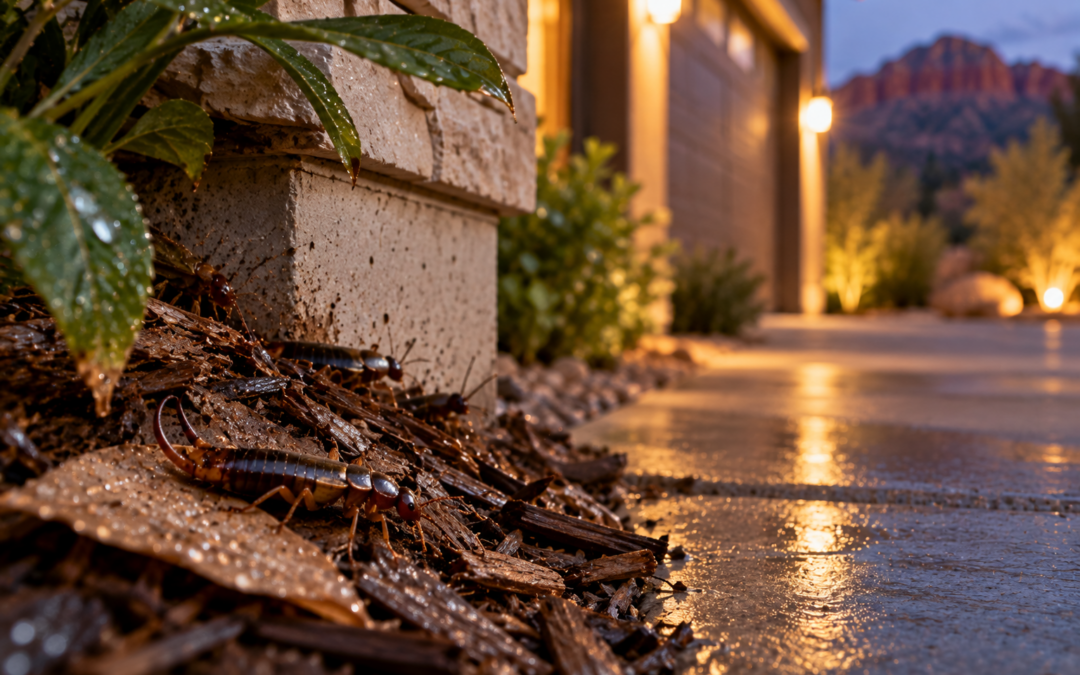
Earwigs are often associated with hot weather, but cooler conditions can change where they gather around Southern Utah properties. These insects prefer dark, protected spaces with dependable moisture, so seasonal temperature shifts can push them toward mulch, shaded foundations, garages, bathrooms, laundry areas, and other places that stay damp longer than exposed ground.
Our team approaches earwig control by looking at the conditions behind the sightings. Moisture, shelter, organic debris, irrigation, and structural openings can all influence where earwigs hide during the day and how they move after dark. Repeated indoor activity often points to a nearby exterior source, which is why professional inspection is useful for identifying the pattern before treatment is planned.
Cooler Weather Can Shift Earwigs Toward Moist Shelter
Earwigs are sensitive to dry conditions and spend much of the day in tight, protected hiding places. During Southern Utah heat, they may gather beneath rocks, mulch, planters, stored items, or shaded landscape edges. When evenings become cooler, those same moisture-rich areas can remain attractive because they offer stable shelter from changing temperatures.
Our guide to summer earwig activity explains how earwigs use garages, patios, bathrooms, laundry areas, irrigation zones, and other protected spaces when outdoor conditions become harsh.
Common damp hiding areas include:
- Mulch beds that retain moisture near the foundation
- Shaded landscape borders with limited airflow
- Irrigation zones where soil stays damp after watering
- Garages or storage spaces with low-disturbance shelter
- Bathrooms and laundry areas near plumbing or condensation
- Planters, leaves, and debris that hold moisture close to walls
These areas can support activity even when surface temperatures fall. If earwigs repeatedly appear indoors, the source may be close to the building rather than deep inside the home.
Entry Points Matter When Outdoor Conditions Change
Moisture may attract earwigs toward the structure, but small gaps determine whether they can move inside. Worn weatherstripping, loose door sweeps, damaged screens, utility penetrations, and cracks around windows or foundations can all provide access.
Our technicians compare those openings with the locations where earwigs are actually being found. A bathroom sighting may connect to a plumbing gap, while repeated activity near a garage may point to a door seal or foundation transition. This keeps earwig control focused on active routes instead of treating every crack the same way.
Key entry areas to evaluate include:
- Gaps beneath exterior doors and garage-door edges
- Worn seals around sliding doors and windows
- Openings where pipes, wires, or vents enter exterior walls
- Cracks near foundations, patios, or wall transitions
- Damaged screens around windows or ventilation openings
- Baseboard areas near rooms with repeated earwig activity
The broader issue is often a combination of access and shelter. Closing an opening without addressing the damp conditions outside may reduce one route while leaving the property attractive around another.
Long-Term Control Works Best When Moisture And Access Are Addressed Together
Seasonal weather in St. George can shift quickly. Dry spells, irrigation changes, monsoon moisture, and cooler nights can all influence where earwigs and other pests gather. Our article on common pest entry provides useful context for how doors, windows, utility gaps, roofline openings, and other structural features can become access points when pests move toward a home.
A professional plan looks at both the source conditions and the route indoors. That may include moisture management, exterior cleanup, entry-point recommendations, targeted treatment, and follow-up when activity continues.
A long-term earwig-control strategy may include:
- Reviewing irrigation so water does not collect near foundations
- Reducing damp debris around patios and exterior walls
- Keeping mulch and groundcover from staying saturated beside the home
- Identifying active entry points before structural recommendations are made
- Targeting treatment to confirmed harborage and movement areas
- Rechecking problem zones after weather or irrigation patterns change
Professional follow-up matters because seasonal pressure can shift. An area that is quiet during a dry stretch may become active again after irrigation changes or rainfall. Monitoring helps our team determine whether earwig numbers are actually declining or simply moving to a different part of the property.
Earwigs are generally nuisance pests, but recurring sightings can reveal conditions that also support ants, cockroaches, spiders, mosquitoes, scorpions, termites, rodents, or bed bugs, all of which are among the pest concerns handled locally. That makes moisture and access worth evaluating as part of the larger property environment.
Professional evaluation also helps distinguish moisture-related earwig activity from unrelated indoor sightings, so treatment can stay focused on confirmed source areas rather than unnecessary applications elsewhere.
The goal is not to react to every individual earwig. It is to understand why damp shelter remains available, where the insects are entering, and which conditions are allowing the pattern to continue. That evidence-based approach makes earwig control more precise and supports better long-term results through seasonal changes.
Dry Out The Conditions Earwigs Keep Finding
If earwigs keep appearing around bathrooms, garages, patios, or other damp areas, contact Preventive Pest Control for professional earwig control focused on inspection, targeted treatment, entry-point guidance, and long-term prevention.