
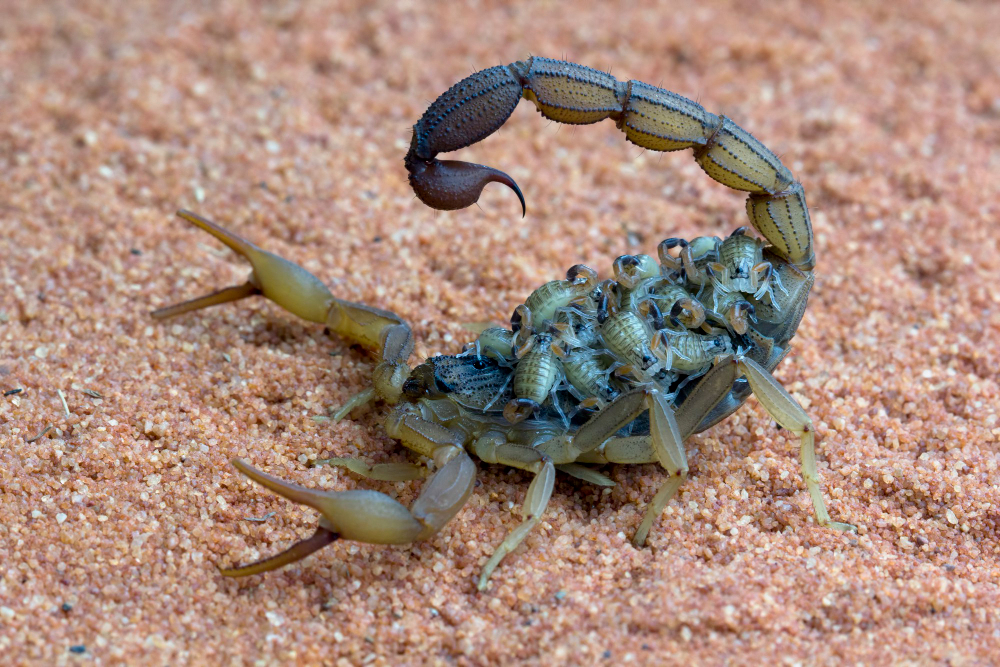
Southern Utah gives scorpions many of the conditions they need to survive. Hot summers, dry terrain, rock landscaping, block walls, cracks, shaded exterior areas, and abundant insect prey all create opportunities for scorpions to hide and hunt.
They are mostly active after dark, which means a property can support scorpion activity long before anyone sees one. Effective scorpion control starts with understanding where they shelter, what draws them closer to homes, and how small entry gaps allow them indoors.
Regional building styles and outdoor features can also create different pressure points, so the same scorpion-control strategy may not fit every Southern Utah property.

Desert Conditions Give Scorpions Natural Advantages
Scorpions are well-suited to hot, dry environments. During the day, they avoid extreme heat by hiding beneath rocks, inside cracks, around block walls, under patio edges, or in other shaded spaces. At night, they emerge to hunt.
Southern Utah properties can unintentionally recreate these ideal conditions. Common hiding areas include:
- Rock mulch, stacked stone, and block walls with shaded crevices.
- Garage clutter, storage bins, and rarely disturbed corners.
- Cracks along foundations, patios, fences, and exterior walls.
- Irrigated landscaping that attracts insects and provides moisture.
- Woodpiles, debris, and dense ground cover near the structure.
These hiding places matter because scorpions usually stay close to areas that provide both shelter and prey. A property with many insects may also give scorpions a steady food source.
Hot Weather Can Push Scorpions Closer to Homes
Summer heat does not simply make scorpions more visible. It can also change where they search for cooler shelter, moisture, and prey. Garages, patios, crawl spaces, wall gaps, and shaded foundation edges may become more attractive when outdoor conditions are especially harsh.
This is one reason desert home protection requires more than treating a single sighting. Professionals look at entry points, exterior activity zones, moisture conditions, and the places where insects gather.
A scorpion found indoors may have entered through a door gap, foundation crack, utility opening, garage edge, or another small access point. The sighting itself does not always reveal where the problem started.
Food Sources Keep Scorpion Activity Going
Scorpions are predators, so their presence often connects to other pest activity. Cockroaches, spiders, crickets, earwigs, and other insects can provide prey around homes, patios, garages, landscaping, and exterior walls.
Conditions that may support scorpion activity include:
- Exterior lighting that attracts insects after dark.
- Irrigation or leaks that create moisture near foundations.
- Clutter that gives both scorpions and prey places to hide.
- Dense landscaping close to walls and entry points.
- Openings that allow insects and scorpions to move indoors.
Reducing scorpion pressure, therefore, often requires a broader pest-control view. Treating only the visible scorpion may leave behind the insect activity and shelter conditions that helped attract it.
Professional scorpion control can identify these connections and focus treatment on the parts of the property that are actually supporting activity.
Why Scorpions Enter Homes During Summer
Scorpions do not enter homes because they prefer indoor living in every situation. They may wander inside while following prey, looking for cooler conditions, or exploiting easy access.
This guide to summer scorpion activity explains how extreme heat can make garages, wall voids, entry gaps, and shaded indoor spaces more appealing.
A complete inspection may focus on:
- Garage-door gaps and worn weather stripping.
- Foundation cracks and openings around utility lines.
- Exterior walls, fences, and block walls with hidden crevices.
- Patio edges, storage areas, and dark interior corners.
- Moisture sources that attract insect prey.
Because scorpions can hide in narrow spaces and remain inactive for long periods, one-time surface treatment may not reach every problem area. A property-specific plan is usually more effective than reacting only after another sighting.
Long-Term Scorpion Control Depends on the Whole Property
The strongest scorpion control approach looks at the entire property instead of one room, one crack, or one visible scorpion. Southern Utah homes can face changing pressure as heat, irrigation, insect activity, landscaping, and seasonal conditions shift.
A complete plan may include:
- Inspecting foundations, garages, patios, block walls, fences, and landscape rock.
- Identifying gaps and shaded hiding areas that support movement.
- Checking for insect activity that may serve as a food source.
- Applying targeted treatment to active routes and likely harborage zones.
- Monitor results and adjust the plan when activity changes.
This whole-property approach matters because scorpions may move between exterior hiding places and indoor spaces without being noticed. Long-term results depend on reducing shelter, limiting entry opportunities, and addressing the insect populations that help sustain them.
Professional service also helps distinguish active pressure from isolated sightings. That makes treatment more precise and prevents unnecessary guesswork around where scorpions may be hiding.
Make Your Property Less Inviting to Scorpions
When scorpions keep appearing around garages, patios, walls, or indoor spaces, a detailed inspection can reveal the conditions supporting them. Contact Preventive Pest Control for professional scorpion control focused on targeted treatment and long-term prevention.