Southern Utah businesses can face pest pressure well into fall because desert temperatures, irrigation, deliveries, waste areas, storage rooms, and shared utility spaces continue creating opportunities for activity. Ants, cockroaches, mosquitoes, spiders, scorpions, termites, rodents, bed bugs, and earwigs may all respond differently as nights cool and winter approaches. Some move toward warmer shelter, while others remain active around moisture, food, or low-disturbance areas.
Our team uses pest monitoring to understand how those patterns change before they interfere with customers, staff, inventory, or inspections. Instead of waiting for a visible infestation, regular commercial service compares current findings with earlier visits, tracks recurring trouble spots, and identifies new vulnerabilities. That continuity helps keep prevention focused on the parts of the property that are actually changing.

Monitoring Helps Catch Seasonal Changes Before They Become Disruptions
Commercial properties rarely stay the same from one month to the next. Deliveries increase, storage areas shift, doors stay open longer, landscaping changes, and maintenance issues can create new moisture or entry points. In desert climates, even a small change in irrigation or temperature can move pest activity toward a building.
Our guide to regular pest treatments explains why recurring service is useful when heat, shade, moisture, and seasonal transitions continually change pest pressure.
A pre-winter monitoring visit may include:
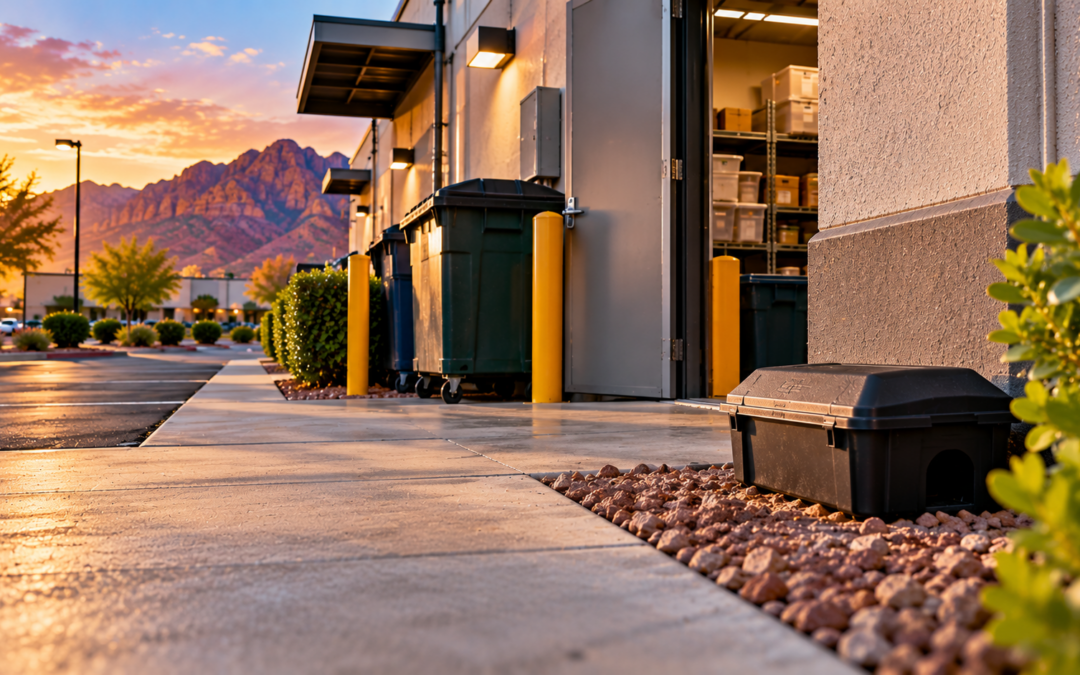
- Checking entrances, loading areas, utility spaces, and waste zones
- Reviewing storage rooms and low-disturbance corners for fresh activity
- Looking for ant trails, cockroach evidence, webs, or rodent signs
- Inspecting irrigation, drains, and damp areas for moisture-related pressure
- Rechecking known trouble spots from earlier visits
- Documenting changes that may need treatment or repair
This allows our technicians to respond to current conditions rather than repeating the same service regardless of what is happening on the property.
Entry Points And Shelter Become More Important As Nights Cool
As outdoor conditions become less comfortable, pests may spend more time around garages, doors, vents, rooflines, foundation gaps, and utility penetrations. Rodents may test structural openings, while cockroaches, earwigs, spiders, and scorpions may move toward warmer or more protected areas.
Businesses often have more entry opportunities than homes because doors open throughout the day, supplies arrive regularly, and service areas connect interior spaces with loading zones or exterior storage.
Important areas to monitor include:
- Worn door sweeps and weatherstripping around entrances
- Gaps around pipes, cables, vents, and utility lines
- Shared walls and storage areas with limited inspection access
- Roofline or attic openings that may support rodents or spiders
- Waste zones that attract insects or rodents
- Exterior lighting that concentrates insect activity near doors
Professional pest monitoring helps determine which openings are actually connected to activity before exclusion or targeted treatment is planned.
A Pre-Winter Review Helps Build A Better Long-Term Commercial Plan
Our article on seasonal pest preparation highlights the value of checking moisture, shelter, entry points, and recurring hot spots before seasonal pressure increases. The same principle applies to commercial buildings, where a small unnoticed issue can affect more people and more daily operations.
A professional monitoring program may include:
- Comparing current findings with earlier service records
- Adjusting treatment as seasonal pest activity changes
- Monitoring moisture, irrigation, and drainage conditions
- Rechecking structural access around high-traffic areas
- Tracking termite, rodent, scorpion, and insect evidence over time
- Scheduling follow-up when activity returns between visits
That history matters because pests can shift locations. An area that was quiet in summer may become active once nights cool, while another zone may improve after moisture or access is corrected.
Commercial pest control also needs to respect how the business operates. Restaurants, offices, warehouses, and other workplaces have different schedules, customer areas, storage patterns, and sensitive spaces. Our technicians plan service around those realities so inspection and treatment can happen discreetly without becoming a larger interruption than the pest problem itself.
Monitoring before winter also gives managers time to correct supporting conditions. A leaking fixture, damaged door seal, cluttered storage corner, or recurring waste issue can be addressed before pests settle into a protected space for the season. When those maintenance changes are combined with targeted treatment, the overall plan becomes more efficient.
The strongest commercial programs are not based on one-time reactions. They use inspection, treatment, prevention, documentation, and follow-up together. That gives our team a clearer picture of what is changing and helps reduce the chance that a quiet fall problem turns into a larger winter disruption.
Businesses also benefit from clear service records before winter. Documented findings can help managers see whether a recurring issue is improving, whether a repair reduced activity, and which areas deserve closer attention during the next visit. That record is especially useful for properties with multiple entrances, storage rooms, tenant spaces, or frequent deliveries because pest pressure may not appear in the same location every time. Consistent documentation turns individual service visits into a longer-term prevention strategy rather than isolated responses.
Keep Winter Pest Pressure From Becoming A Business Problem
If your workplace needs consistent seasonal protection, contact Preventive Pest Control for professional pest monitoring, targeted commercial treatment, prevention, and long-term follow-up.