
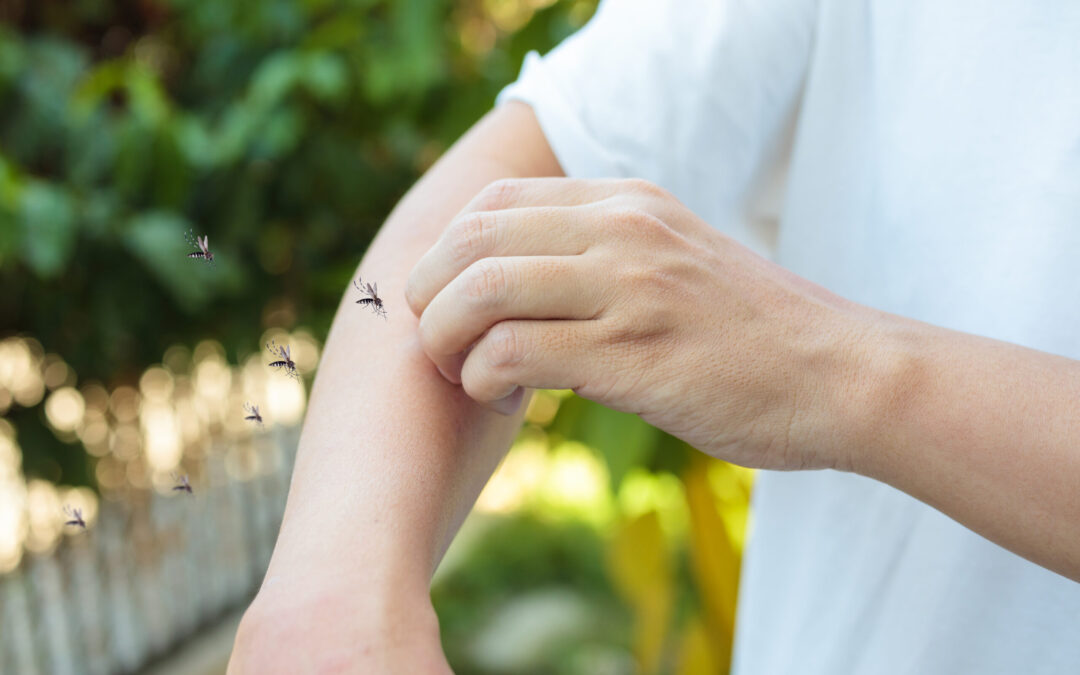
Summer irrigation keeps Southern Utah landscapes alive through intense heat, but it can also create the moisture mosquitoes need to reproduce and rest. A lawn may look dry overall while small pockets of water remain in sprinkler boxes, plant saucers, drains, low spots, or shaded soil. Those overlooked areas can become especially important during hot weather.
Effective mosquito control starts by understanding how water moves across a property after each irrigation cycle. Mosquitoes do not need a large pond to develop. Small, persistent water sources can support breeding, while damp vegetation and cooler shade give adults places to rest during the hottest part of the day. When irrigation, landscaping, and summer heat overlap, mosquito activity can rise quickly around patios, lawns, and entry points.
Irrigation Can Create Small Breeding Sites
Mosquito populations often increase after watering because irrigation can leave standing water in places that are easy to miss. Repeated watering also keeps certain areas damp long enough for mosquito development.
Common problem areas include:
- Plant saucers that hold leftover irrigation water
- Sprinkler boxes with poor drainage
- Low lawn sections where water repeatedly pools
- Decorative containers exposed to overspray
- Drains that stay wet after watering
- Yard items that collect small amounts of water
A broader look at peak pest preparation shows how irrigation, moisture, structural access, and summer conditions can increase pest pressure around Southern Utah homes. For mosquitoes, the key concern is not simply how much water is used, but whether any of it remains available after the system shuts off.
Shade Helps Mosquitoes Stay Near Watered Areas
Adult mosquitoes often rest in cooler, protected locations during the day. Dense shrubs, shaded patios, tall vegetation, and damp landscape edges can provide those conditions, especially after irrigation lowers surface temperatures and increases local humidity.
A yard can therefore support mosquitoes even when obvious standing water is limited. If irrigation repeatedly dampens thick vegetation, shaded soil, or protected corners, adults may remain nearby between feeding periods.
Professional inspection can help connect these resting zones with potential breeding sources. That matters because treating only the most visible activity may overlook the conditions allowing mosquitoes to return. A more complete approach considers water, shade, vegetation, nearby structures, and where people spend time outdoors.
Irrigation Problems Can Make Activity More Persistent
Not every irrigation cycle creates a mosquito problem, but repeated moisture in the same locations can make activity more consistent over time. Broken sprinkler heads, overspray, poor grading, and excessive run times can keep certain areas wetter than intended.
Warning signs worth noting include:
- Water remaining long after irrigation ends
- Sprinklers repeatedly hitting walls or patios
- Damp mulch that rarely dries completely
- Mosquitoes appearing near the same shaded area
- Persistent activity around drains or planters
- Increased bites after watering days
When these patterns repeat, mosquito control is more efficient when technicians can identify where moisture and adult resting areas overlap. Addressing the environmental conditions helps support treatment instead of relying on a one-time response to visible mosquitoes.
Outdoor Gathering Areas Often Reveal The Pattern
Patios, poolside spaces, lawns, and covered seating areas make mosquito activity easier to notice because people spend more time outside during summer evenings. These same areas may also be close to irrigation, planters, shade, or vegetation.
Guidance on outdoor mosquito prevention explains why water, shade, landscaping, lighting, and door access should be considered together before gatherings. A damp planter beside a shaded patio can matter more than a large dry section of lawn farther away.
Professional mosquito control can evaluate where adults are resting, where water is accumulating, and how activity changes after irrigation. That broader view is useful when bites continue even though the property appears generally clean and well-maintained.
Long-Term Mosquito Control Depends On Monitoring
Summer conditions in St. George can change quickly. Irrigation schedules may increase during hotter weeks, plants can become denser, and monsoon moisture can add new water sources that were not present earlier in the season.
A long-term mosquito plan may include:
- Inspecting likely breeding and resting areas
- Checking irrigation zones for recurring standing water
- Evaluating shaded vegetation near patios and doors
- Applying targeted treatment where activity is concentrated
- Rechecking the property as watering patterns change
- Adjusting service based on seasonal mosquito pressure
Professional monitoring adds precision because mosquito activity is rarely uniform across an entire property. One side of the yard may stay dry and exposed, while another remains shaded and damp after every watering cycle.
The most effective approach is to identify the conditions that repeatedly support mosquitoes and respond before populations build around outdoor living areas. When irrigation management, property inspection, targeted treatment, and follow-up work together, mosquito control becomes more focused and better suited to the changing demands of a Southern Utah summer.
Keep Irrigation From Feeding Mosquito Pressure
If mosquito activity rises after watering or keeps returning around your yard, contact Preventive Pest Control for professional mosquito control, targeted treatment, and long-term prevention tailored to Southern Utah conditions.